Relationships behind the book

The book did not cross a border by itself.

People chose to translate, revise, carry, open a door, and read. Their relationships turned an object into a living encounter.

01Manchuria

Lee Eung-chan (이응찬) and the translation circle

A first draft begins in Korean hands

02Tokyo

Lee Su-jeong (이수정)

A traveler receives a book—and prepares one for others

03The border and northwestern Korea

Seo Sang-ryun (서상륜)

A translated page becomes a carried page

Permanent timeline

The Korean Bible—two streams, one unfolding story

Rather than choosing one simple ‘first,’ this timeline distinguishes biblical ideas, portions, New Testaments, and complete Bibles. Catholic and Protestant paths remain visible—and meet in 1977.

CatholicProtestantShared
Catholic stream

Scripture enters through Catholic books

Korean scholars encountered biblical teaching through Chinese-language Catholic books. These were not yet a Korean Bible translation, but they formed an early path by which biblical narratives and vocabulary entered Korean reading communities.

Catholic stream

성경직해광익 and 성경직해 — Gospel readings in Korean

Catholic communities circulated Korean manuscript texts combining Gospel readings for feast days with explanation. Under episcopal supervision, selected readings were revised and printed in nine volumes as 성경직해 between 1892 and 1897. The edition’s title used historical Korean spelling; this display modernizes it for legibility. It was a lectionary tradition—not a translation of the whole Bible.

Object: Korean Catholic lectionary volumes · metal-type printing · 1892–1897 editionsPhotograph: Jocelyndurrey · CC BY-SA 4.0
Protestant stream

Luke and John in Korean

The Manchurian translation circle of John Ross and John Macintyre worked with Korean collaborators including Lee Eung-chan (이응찬), Seo Sang-ryun (서상륜), Lee Seong-ha (이성하), and Baek Hong-jun (백홍준). Korean Gospel portions appeared before Protestant missionaries settled in Korea.

Protestant stream

Lee Su-jeong’s (이수정) Mark travels from Japan

Lee Su-jeong (이수정) translated Mark in Korean script in Japan. Missionaries entering Korea carried his text, showing again that a Korean translator helped prepare the way.

Protestant stream

예수셩교젼셔 — a complete Korean New Testament

The Ross translation circle completed 예수셩교젼셔. Its Korean script widened the possibility of reading beyond those educated in classical Chinese, although literacy, cost, geography, and distribution still shaped access. The title page and opening of Mark let visitors see both the book’s identity and the language encountered by its first readers.

Image provided by (재)대한성서공회 (Korean Bible Society), 120th Anniversary Korean Bible Exhibition Catalogue
Protestant stream

신약젼셔 — an interim complete New Testament

The Bible Committee gathered its translated portions into a complete New Testament. It was an important achievement, but the committee treated it as an interim text requiring correction rather than the final authorized edition. Its cover, title page, and opening of Mark preserve this visible stage of revision.

Image provided by (재)대한성서공회 (Korean Bible Society), 120th Anniversary Korean Bible Exhibition Catalogue
Protestant stream

신약젼셔 — the first authorized edition

After repeated correction of the 1900 text, the translation committee published the 1906 신약젼셔 as its first authorized Korean New Testament. Naming both editions reveals translation as sustained communal revision, not a single finished moment.

Catholic stream

사사성경 — the Four Gospels in Korean

Commissioned under Bishop Gustave Mutel and translated by Korean Catholic clergy including Han Gi-geun, 사사성경 gathered all four Gospels in Korean. It served Catholic readers for decades, but it should be identified precisely as the Four Gospels rather than a complete New Testament or Bible.

Protestant stream

셩경젼셔 — Old and New Testaments together

The 1911 셩경젼셔 completed the first Korean Protestant translation of the whole Bible. The Old Testament was issued by the British and Foreign Bible Society and the New Testament by the American Bible Society. Its publication under colonial rule made the translated text both a religious book and a major body of Korean prose available to readers.

Object: printed Korean Bible · paper, ink, bound volume · 1911British and Foreign Bible Society and American Bible Society · public domain
Protestant stream

Revision and modern spelling

The 1938 셩경 개역 substantially revised the inherited translation, and the 1961 성경전서 개역한글판 aligned it with revised Korean orthography. The sequence shows that a Bible can remain culturally formative while its language continues to be corrected and renewed.

Protestant stream

신약전서 새번역 — Korean scholars and contemporary speech

Korean scholars translated a new New Testament directly from source texts in contemporary spoken Korean. It marked a shift from repeatedly revising the inherited version toward a fresh translation for changing readers and public language.

Shared milestone

공동번역 성서 — a shared translation

Catholic and Protestant scholars produced the Common Translation in an ecumenical effort. It became the Catholic liturgical Bible until 2005 and remains a landmark where the two streams visibly meet.

Protestant stream

Modern-language Protestant translations

표준새번역 appeared in 1993, 개역개정 in 1998, and the revised 새번역 in 2001. Different translation purposes—continuity, contemporary language, scholarship, and public reading—continued to shape Korean editions.

Catholic stream

성경 — the Catholic Church’s official Korean translation

After seventeen years of work, the Catholic Bishops’ Conference of Korea published 성경 as the Catholic Church’s official Korean translation, translated from critical Hebrew, Greek, and Septuagint texts.

Beyond the dates

What does a translation change?

A new edition is not merely the same meaning in different letters. It reshapes relationships among readers, language, worship, and authority.

01

Who could read?

Korean script widened the doorway beyond readers educated in classical Chinese, but literacy alone did not guarantee access. Price, place, gender, status, persecution, and distribution networks also determined whose hands held a text.

02

Which words speak of God?

Terms for God, grace, justice, kingdom, and community are not empty containers. Translators make choices within Korean words that already carry histories of their own.

03

How did Scripture sound?

Lectionary reading, private reading, preaching, study, song, and memorization create different encounters with the same text. Literary or spoken style, honorifics, and sentence rhythm shape how Scripture is heard in public.

04

Who is accountable for the translation?

Translators, Korean-language scholars, churches, Bible institutions, and reading communities carry different responsibilities. ‘Authorized’ does not end the story: revision continues as language changes, scholarship deepens, and readers ask questions.

They read from the book, from the Law of God, clearly, and they gave the sense, so that the people understood the reading.

Nehemiah 8:8 · ESV

People in this room

The names behind the book

A name remains bilingual even when no cleared portrait is available. Established historical English forms are used here; significant alternate romanizations will be recorded in the future person record.

Lee Eung-chan (이응찬)

Korean translator in the Manchurian translation circle

Seo Sang-ryun (서상륜)

1848–1926

Translator, colporteur, and carrier of Korean Gospel texts

Lee Seong-ha (이성하)

Korean collaborator in the early Ross translation work

Baek Hong-jun (백홍준)

Translator, colporteur, and early Protestant leader

Lee Su-jeong (이수정)

1842–1886

Korean scholar and translator of Mark in Japan

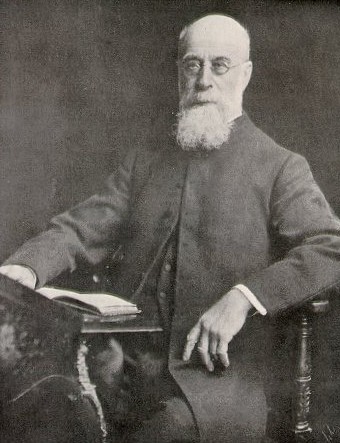
Portrait of John Ross
Unknown photographer · CC0

John Ross

1842–1915

Scotland

Presbyterian missionary and translation partner in Manchuria

John Macintyre

1837–1905

Scotland

Presbyterian missionary and translation partner in Manchuria

Portraits will be added only after reliable identification and image rights are confirmed.

History is not a straight line, but the journey continues.

Continue to the uneven encounter